'/%3e%3cdefs%3e%3clinearGradient%20id='prefix__paint0_linear_4737_37157'%20x1='3.018'%20y1='23.6'%20x2='44.925'%20y2='24.977'%20gradientUnits='userSpaceOnUse'%3e%3cstop%20stop-color='%231CB7FF'/%3e%3cstop%20offset='.502'%20stop-color='%232FF58B'/%3e%3c/linearGradient%3e%3c/defs%3e%3c/svg%3e)


4 takeaways: How reported LaMelo Ball, Naz Reid trade impacts Wolves, Hornets
Jun 25 2026 23:17 · By John Schuhmann · 17 Reads


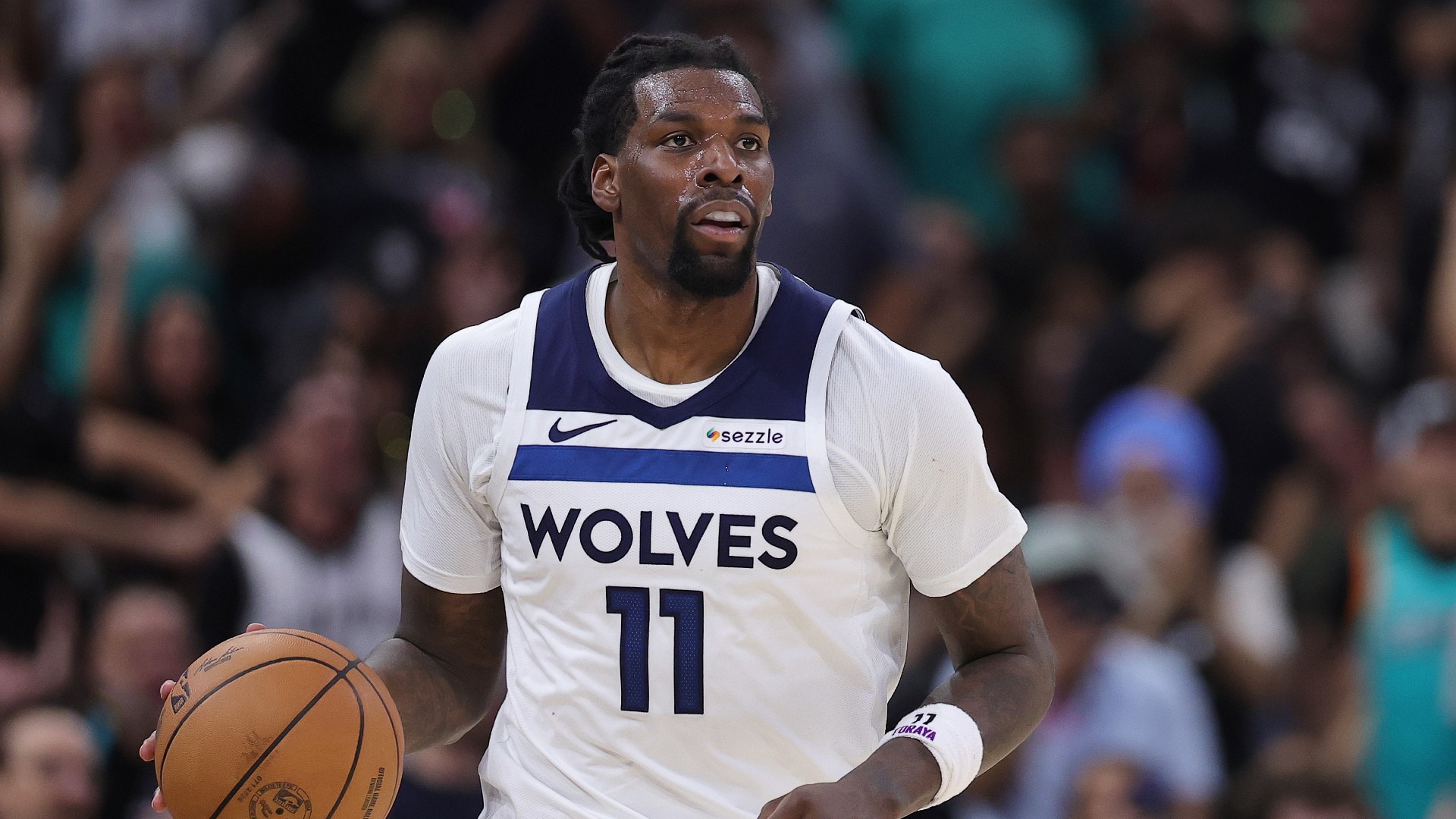
Naz Reid was named the 2023-24 NBA Sixth Man of the Year and brings floor spacing to Charlotte.
Offseason player movement is in full swing, and the
Minnesota Timberwolves made another huge trade
on Thursday, reportedly acquiring LaMelo Ball and Josh Green from the Charlotte Hornets in exchange for Naz Reid, a first-round pick, three first-round pick swaps and three second-round picks.
This is the third time in the last five offseasons that the Wolves have undergone a major makeover. They traded for Rudy Gobert in 2022 and swapped Karl-Anthony Towns for Julius Randle and Donte DiVincenzo in 2024. Now they’ve
turned Randle
and Reid into Ball.
The Hornets, meanwhile, have traded a huge star and the engine of
their top-five offense
. It’s a huge change of direction for both teams, and there are a ton of factors that will determine whether it works for either.
Here’s a look at four of those elements.
1. More Edwards off the catch
Anthony Edwards shot 69-for-139 (49.6%) on catch-and-shoot 3-pointers this season,
the best mark
among 308 players with at least 75 catch-and-shoot attempts.
Among 100 players with at least 75 catch-and-shoot 3-point attempts and at least 75 pull-up 3-point attempts, Edwards had the third biggest differential between how well he shot on the former and how well he shot on the latter.
Biggest difference, catch-and-shoot vs. pull-up 3-point percentage, 2025-26
Catch-and-shoot
Pull-up
Player
3PA
3P%
Diff.
%C&S
Daniss Jenkins
114
45.6%
79
26.6%
19.0%
59%
Paolo Banchero
125
39.2%
139
22.3%
16.9%
47%
Anthony Edwards
49.6%
363
35.3%
14.4%
28%
Quentin Grimes
248
38.3%
129
24.0%
14.3%
66%
Immanuel Quickley
333
41.1%
138
27.5%
13.6%
71%
Minimum 75 attempts of each (100 players)
According to tracking data, 61.3% of Edwards’ 3-point attempts were self-created. That was the sixth highest rate among 307 players with at least 100 total 3-point attempts and much higher than that of Ball (47.3%, 22nd).
Edwards
ranked higher
in time of possession (6.0 minutes per game, 12th) than Ball (5.9, 16th). But Ball had the ball for a higher percentage of his minutes on the floor (21%) than Edwards (17%), and he’ll obviously allow Edwards to play off the ball (and shoot off the catch) more often than he did with Donte DiVincenzo as the Wolves’ nominal point guard.
Despite 72% of his 3-point attempts coming of the dribble, Edwards had
his most efficient scoring season
of his career in 2025-26. His true shooting percentage of 61.7% ranked 11th among 40 players who averaged at least 20 points per game, and he should become more efficient playing alongside one of the best passers in the league.
2. Gobert left alone on the frontline
The Wolves had a solid, three-man, frontline rotation with Reid coming off the bench behind Randle and Gobert. Now, Gobert is the only one of the three remaining, and they’ve yet to replace either of the other two.
The great thing about a three-man rotation for two frontcourt spots is that you can always have (at least) two of the three on the floor, and that’s what the Wolves did. They played more than eight times as many regular-season minutes with at least two of the bigs on the floor (3,276) as they did with only one of the three on the floor (389) this past season.
Gobert was the one who played alone the least, logging just 73 total minutes with neither Randle or Reid on the floor. So playing smaller at power forward with Gobert at center will be something new for the Wolves.
But he was obviously the most important of the three. He’s, by far,
the best rebounder
, and the Wolves allowed
7.9 fewer points per 100 possessions
with Gobert on the floor (108.0 per 100) than they did with him off the floor (115.9 per 100). That’s not quite a Victor-Wembanyama-level differential, but it’s still huge for a full-time starter.
3. Breaking up the best lineup ever
With their 31-point loss to the Orlando Magic in the final SoFi Play-In game, the Hornets have missed the playoffs in each of the last 10 years. That’s both the league’s longest active drought (double that of any other team) and the longest in Eastern Conference history.
But statistically, they were
the eighth best team
in the league this past season, outscoring their opponents by 4.9 points per 100 possessions. That was up from minus-9.1 per 100 (
27th
) the season before, with that being the second biggest season-to-season jump in the last 30 years.
Ball, Brandon Miller and Moussa Diabaté all played a lot more minutes than they did in 2024-25, while the Hornets also added Kon Knueppel via the draft. And when you combined those four guys with Miles Bridges, you had one of the best starting lineups in recent memory.
The Hornets outscored their opponents by an amazing
26.4 points per 100 possessions
in the 509 minutes that their starting lineup played together. That was the best mark for any lineup that played at least 250 minutes in the 19 seasons for which we have lineup data.
Best NetRtg, lineup with 250+ minutes, since 2007-08
Team
Season
Lineup
MIN
NetRtg
Charlotte
2025-26
Ball-Miller-Knueppel-Bridges-Diabaté
509
+26.4
New York
2012-13
Felton-Kidd-Smith-Anthony-Chandler
269
+25.3
Boston
2021-22
Smart-Brown-Tatum-Horford-Williams
443
+24.6
Orlando
2008-09
Nelson-Lee-Turkoglu-Lewis-Howard
256
+23.8
Minnesota
2017-18
Jones-Butler-Wiggins-Towns-Gibson
261
+23.7
NetRtg = Point differential per 100 possessions
4. How much will the Hornets’ offense fall off?
Ball will seemingly be replaced in that lineup with Coby White, who has reportedly
agreed to re-sign with the Hornets
after being acquired from Chicago at the trade deadline. White played just
45 regular-season minutes
alongside Miller and Knueppel, with about 38 of those coming with Ball on the bench. Those minutes were terrific for the Hornets, but that’s a tiny sample size.
Overall, the Hornets saw a huge drop-off offensively when Ball was off the floor last season. When he was on the floor, they scored 123.2 points per 100 possessions,
the best on-court mark
for a non-Nugget who averaged at least 20 minutes. When he was off the floor, they scored just 110.6 per 100, with that being the third biggest differential among 263 players who played at least 1,000 minutes for a single team.
Biggest on-off differential, points scored per 100 possessions
On Court
Off Court
Nikola Jokić
126.1
112.7
13.4
Jamal Murray
124.4
111.3
13.1
LaMelo Ball
123.2
110.6
12.6
Shai Gilgeous-Alexander
121.5
110.4
11.1
Duncan Robinson
120.8
109.9
10.9
Minimum 1,000 minutes with a single team (263 players)
The Hornets are obviously sacrificing some playmaking with the departure of Ball. They’re also going to play slower, having averaged
15.3 fast-break points per 48 minutes
with Ball on the floor and just 11.0 per 48 with him off the floor.
But White has been the more efficient scorer over the last three years, having shot better in the paint, from mid-range and from 3-point range than Ball, while also registering a much higher free throw rate. They’re also adding Reid, who allows them to put five shooters on the floor at one time. Knueppel should also be able to take on additional playmaking duties.
***
John Schuhmann has covered the NBA for more than 20 years. You can e-mail him
here
, find his
archive here
and
follow him on Bluesky.