
'/%3e%3cdefs%3e%3clinearGradient%20id='prefix__paint0_linear_4737_37157'%20x1='3.018'%20y1='23.6'%20x2='44.925'%20y2='24.977'%20gradientUnits='userSpaceOnUse'%3e%3cstop%20stop-color='%231CB7FF'/%3e%3cstop%20offset='.502'%20stop-color='%232FF58B'/%3e%3c/linearGradient%3e%3c/defs%3e%3c/svg%3e)


The Defining Legacy of the 2026 FIFA World Cup: Multi-Ethnicity Players
Jul 09 2026 18:50 · By onefootball.com · 34 Reads


Open menu
OneFootball's home page
Search
Settings
Sign In
Urban Pitch
·
9 July 2026
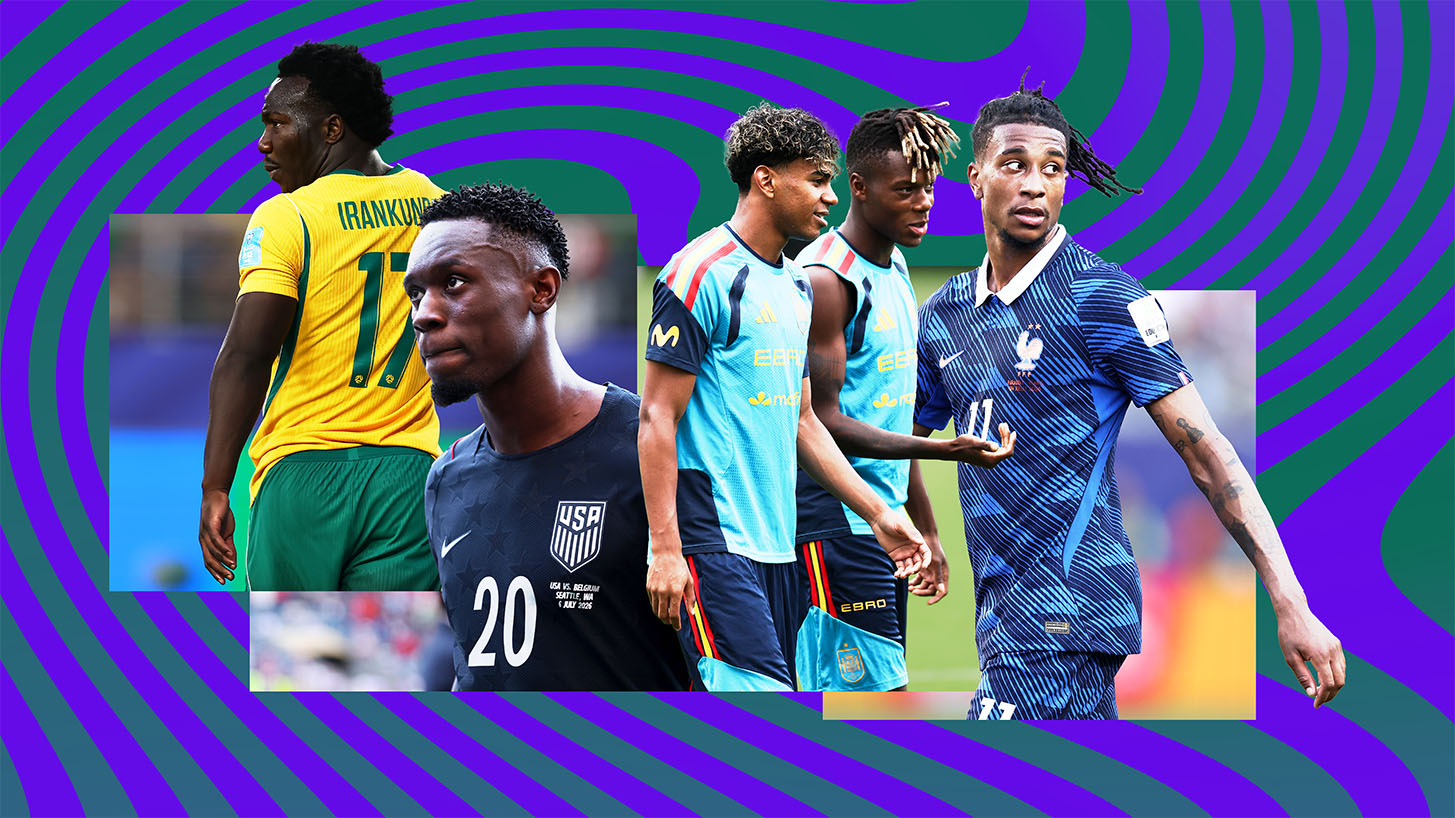
With 48 teams participating, the 2026
World Cup
is the most “global” the tournament has ever been. That’s also evident in the players, who often come from multicultural and multi-ethnic backgrounds.
Football and politics go hand in hand. They always have and they probably always will. Anyone who tries to separate the two is either a politician or Gianni Infantino himself.
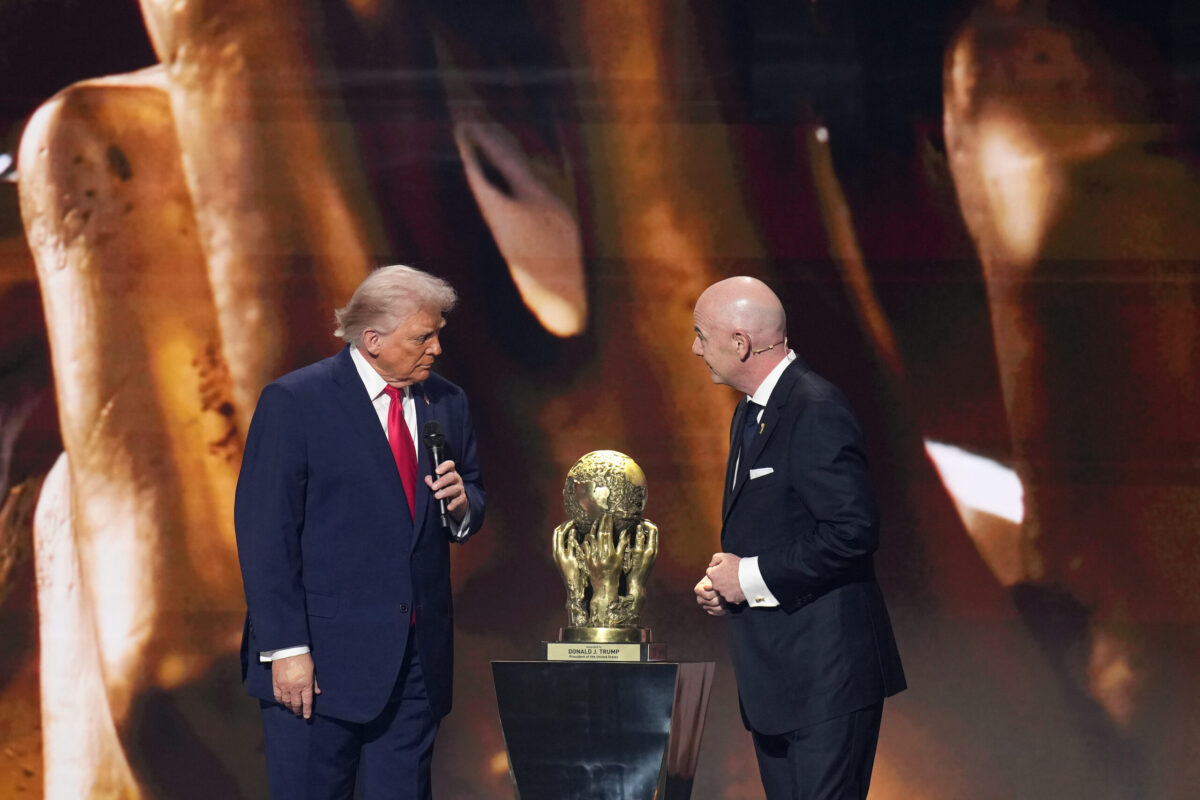
Photo by Andrew Harnik/Getty Images
This stands true in 2026, specifically. The build up to the
FIFA World Cup
was fraught with United States President Donald Trump attempting to squeeze himself and the presupposed grandeur of his ideas to the fore. Infantino co-operated too, heralding the U.S. Commander in Chief as the savior of the world and the beautiful game, giving him the
FIFA
Peace Prize less than three months before he’d declare war against Iran, a participant in the
.
This, plus the high prices for tickets and public transport, and the added advertisement opportunities disguised as hydration breaks represented aggressive examples of the “Americanization” of the sport, even if Mexico and Canada are also hosts.
In a way, a part of that happens at pretty much every
. One doesn’t have to go too far back to witness Qatar doing the same, with football’s power as a geopolitical force now more than it ever was.
FIFA capitalizes on exactly that, ironically constantly attempting to separate the sport from politics while doing the opposite in the background.
This legitimation comes at a point when the
will actually stand in direct contrast to an idea shared by the Trump Administration and many others across the globe: the pigeonholing of national identities.
For them, a “true” citizen of their country is meant to be a certain way, by race, affiliations or habits. Trump couldn’t be more vocal about it. The same has increasingly been said for how a British, French, German or Spanish citizen should be. Politicians, if not now, then at various points go public about these, enforcing the idea that identities of citizens are very specific.
They directly oppose immigration, going to the extent of villainizing immigrants. Former Hungary prime minister Viktor Orban was vocal, once infamously claiming in 2022 that Europeans should not mix with non-Europeans. At one point, Orban also passed a regulation which required migrants to reside inside shipping containers. He also went on to compare non-Europeans with terrorists, when defender Loïc Négo, who was born in France and has Guadeloupean heritage, was a very active member of the national team.
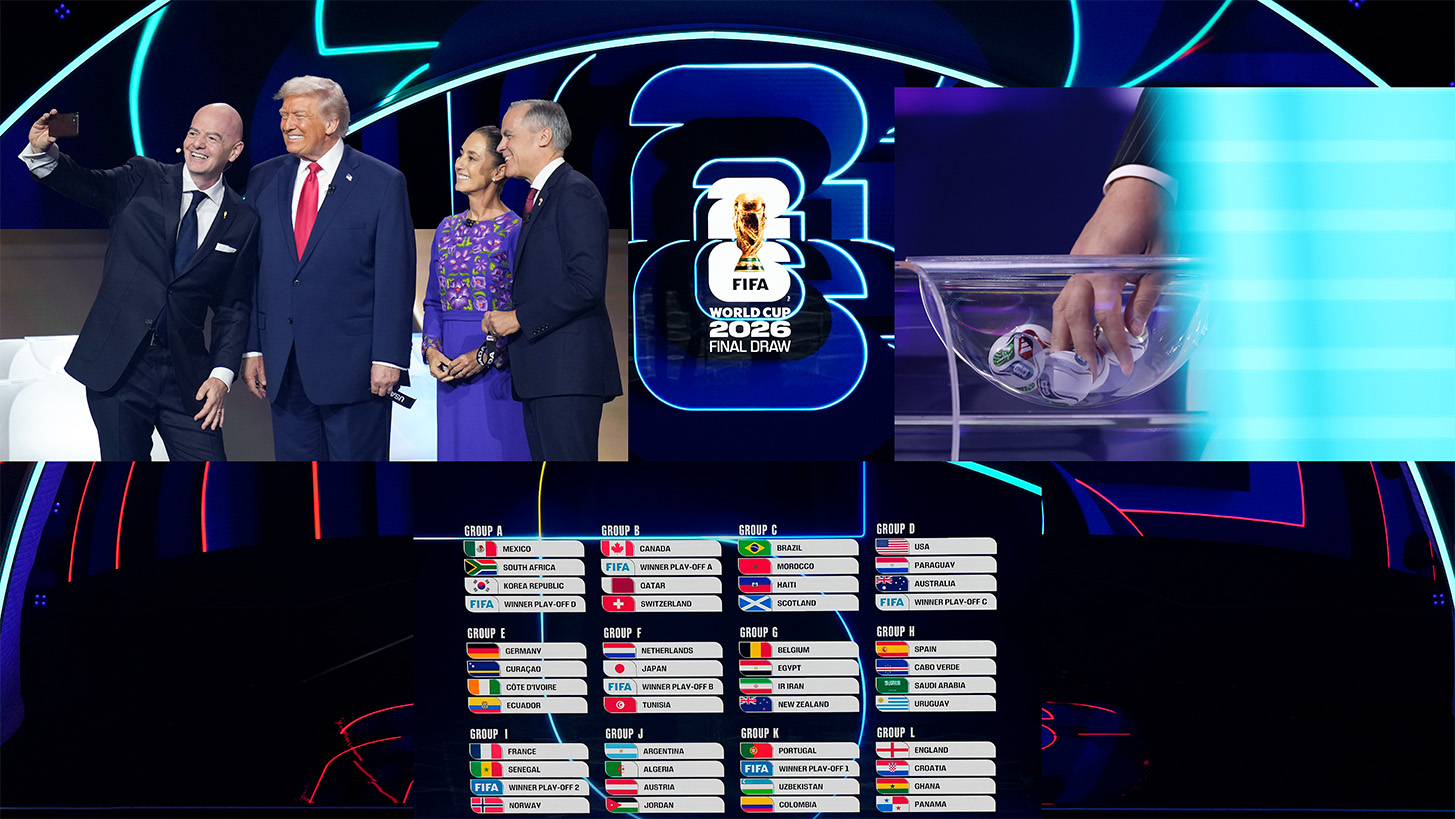
The 2026
is the most global tournament in the competition’s history. With 48 teams taking part, individual sides are increasingly boasting more diversity. If anything, the
has become a celebration of multiculturalism, and is a platform for it.
Curaçao is the most evident example. Only one player in that squad, Tahith Chong, was born in the country. The rest were born in the Netherlands and came through Dutch youth academies. They have Dutch passports, but playing for
Curaçao
has added purpose to their lives.
The small nation’s storied history means that even when it qualified for the
, it wasn’t just celebrated in the capital city of Willemstad but also in parts of the Netherlands.
See full screen
This is a complexity seen across the tournament. Almost a quarter of the players at the 2026
are playing for a country that they weren’t born in. In essence, they are representing an imagined community and are a part of it themselves, either by compulsion or by convenience.
Whether it is one of the two is sometimes besides the point, especially when it comes to immigrants from Western Africa.
To them, football represents escape.
The Conversation
recently cited a survey conducted in West Africa in which people between 18 and 39 were asked about what their biggest dream in life was. Thirteen percent of candidates from Ghana wanted to become a footballer and the number stood at 10% in Gambia. Even if higher ages within that range have pretty much no chance of making it professionally, their dreams don’t quite go away.
For those in the younger bracket, opportunities in that part of the continent remain sparse and money on the table isn’t enough for them to make a living off it. This leaves European migration the only option for them to make a living in the sport.
Very few of the fortunate ones migrate through club-to-club transfers, while others travel through ways that operate in the grey zones of formal travel, seeking help of intermediaries that operate on their own accord.
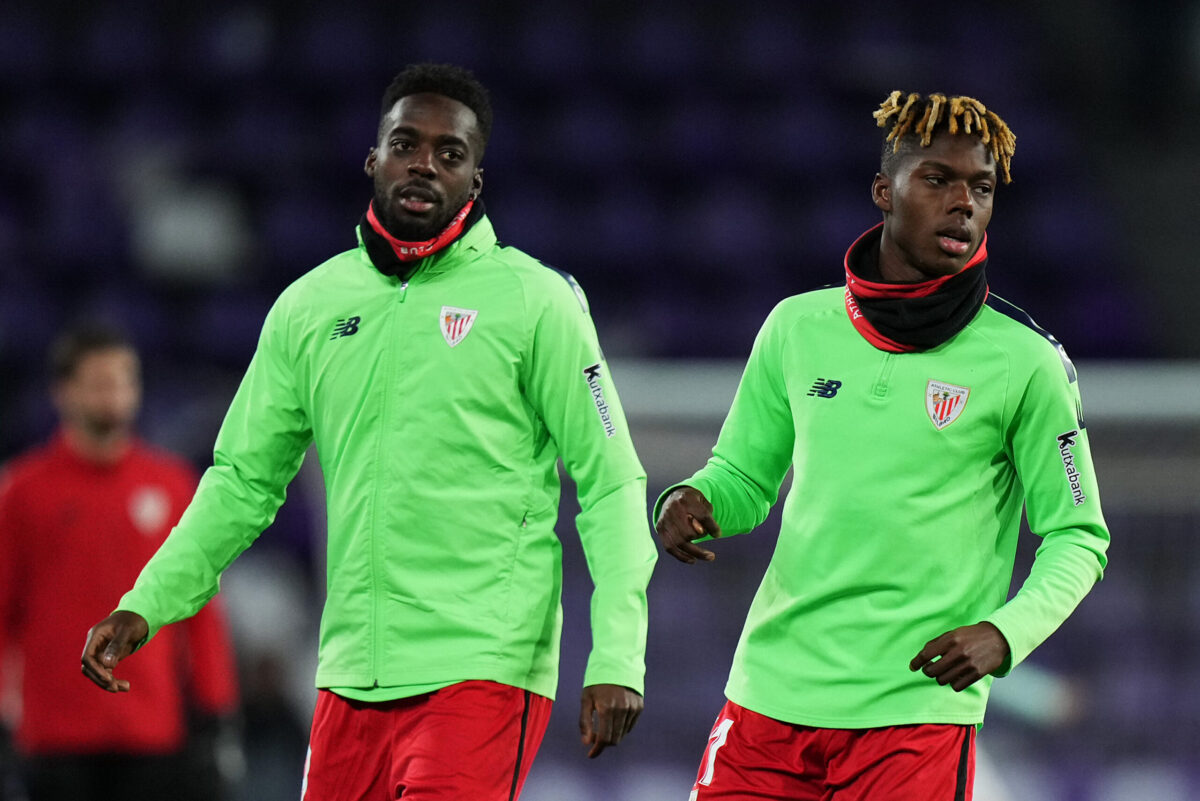
Photo by Angel Martinez/Getty Images
Spain international
Nico Williams’
parents undertook a perilous journey from Ghana to reach Spain in 1994. His mother was pregnant with his older brother Iñaki during this travail, which crossed the treacherous Sahara desert. Many in their group passed away during the journey and Nico’s parents were also detained on their arrival in Spain. That is when they were told to tear up their Ghanaian documents and seek refuge in the name of Liberian immigrants.
The war-torn nature of Liberia at that point in history helped them seek asylum in Spain.
Coincidentally, it was
Alphonso Davies’
life that was completely turned upside down by the Second Liberian Civil War in 1999. His parents fled the country and reached safer grounds in Ghana, where they found a temporary home at Buduburam camp, less than 30 miles away from the capital city of Accra.
Davies took birth in that camp but living conditions were dire. Food and water shortages meant many starved to death and the Davies family had to survive in intense poverty. It was five years later that they landed in Canada.
The now-
Bayern Munich
star played for an after school program that was free of cost, making football a very accessible pathway for him. That is also a pattern observed amongst many footballers that have immigrant backgrounds.
When housing rates in the center of cities are high, they settle for the suburbs, which often have more spaces and a high population density. France’s banlieues have a very specific environment that has helped in the development of the likes of
Kylian Mbappé
,
Riyad Mahrez
Paul Pogba
Thierry Henry
, and
Patrick Vieira
The population of these Parisien suburbs has roots all across the African continent, from the Maghreb region in the north to countries throughout Sub-Saharan Africa.
Kids play high-intensity games on the narrow streets, sometimes well before the formal setups can expose them to that. Football becomes a way out of those conditions too, as many parents back them to the hilt to achieve that dream.
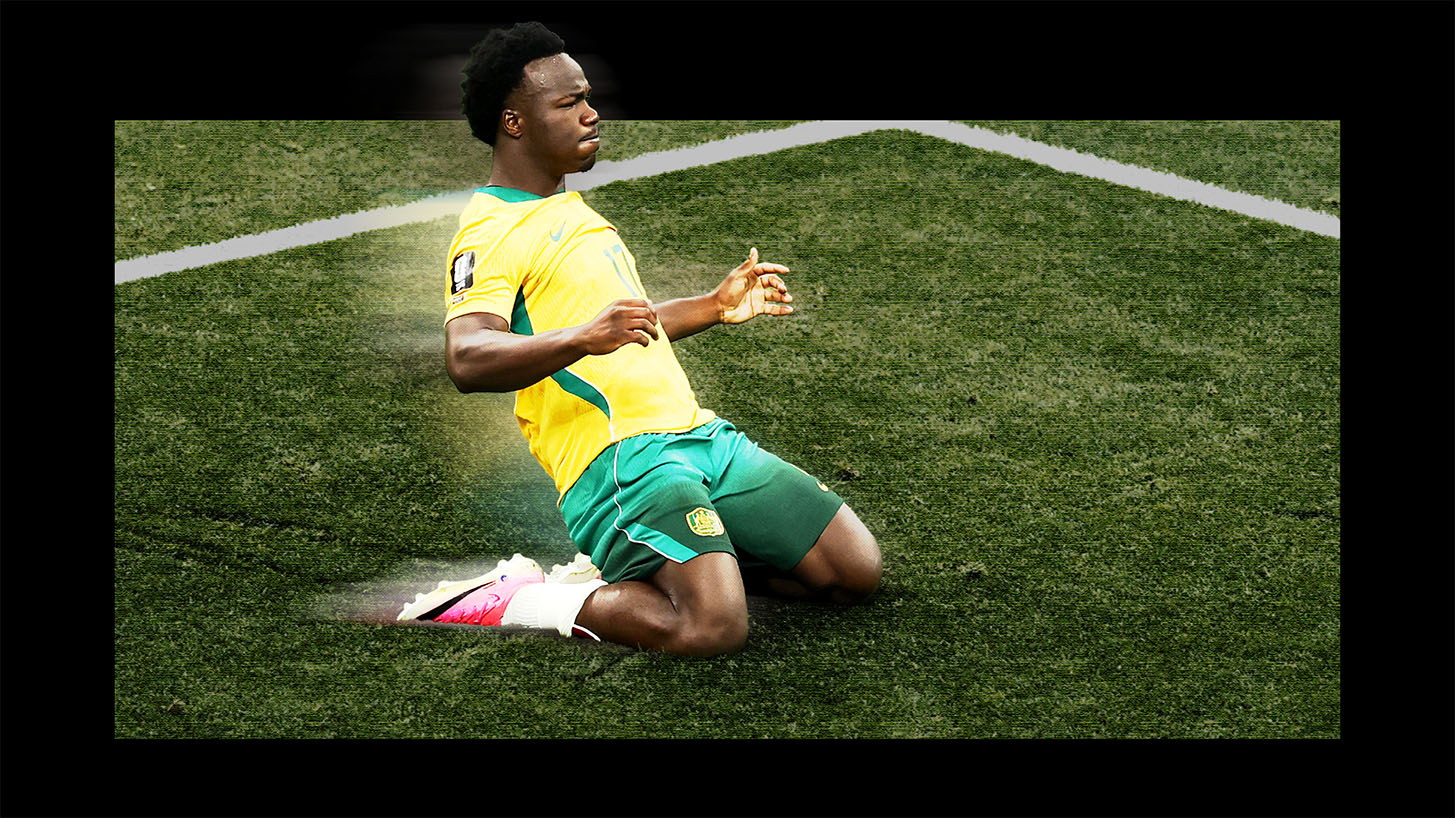
That informal setup is also what turned Australia’s
Nestory Irankunda
into what he is today.
The
Watford
talent scored on his
debut against Türkiye and in a way, it was politics itself that shaped his life and career. His well-taken goal was simply a reminder of it.
Irankunda’s parents escaped Burundi in 2005 during the heated civil war, which was a long-standing conflict between the Hutu rebels and Tutsi-led national army. The journey was undertaken on foot and led them to Tanzania, which is where Nestory was born in 2006.
When the would-be attacker was only 3 months old, his family moved to Perth and eventually settled in a working-class neighborhood of Parafield Gardens in Adelaide. The area was built in the mid-20th century to provide affordable housing to industrial workers and became a place where Irankunda would play football with his brothers, developing close control that he learned quickly from the front yard games.
In almost every game, stories like Williams’, Davies’, and Irankunda’s are quite common. They are reminders that football is political, one way or another. Mixed identities add color to a tournament which will probably be boring without it. Hard identities would reduce and eliminate these stories and without that color, kids growing up will miss out on what makes football and the
truly fascinating.
While Trump and politicians of his ilk can exist in the pretense of hard identities, success in a football sense is near impossible to achieve with that.
Spain’s EURO 2024 triumph featured Williams on one wing and
Lamine Yamal
, a child of Moroccan and Equatorial Guinean immigrants, down the other. Together they revolutionized a Spanish side that had for years been so desperate for dynamic attacking players.
Folarin Balogun
, an American citizen by birthright, was perhaps the
U.S. men’s national team’s
best player at the 2026
, and was so good that the Trump administration helped get his red card suspension postponed for the USMNT’s round of 16 match against Belgium.
France’s historically dominant squad would be nothing without the Parisien suburbs and immigration altogether.
Michael Olise
, perhaps the most important player on the team, claims himself to be from four different countries: France, Algeria, Nigeria, and England.
Hard identities help with political certainties and nothing helps politicians more whenever they attempt to come to power. But that is not how sport or football at the
works. The tournament feeds off uncertainty and unpredictability that has kept it alive for close to a century now.
It has people who have lived lives that many can’t comprehend, pushed through for their children, and did all they could to rise from the cracks that a fractured society presented them with. And that simply can’t be boxed or caged and the
lets all of it thrive.
Nico Williams should return for Spain v Portugal in World Cup last 16
OffsAIde
“One of the toughest challenges of my career” – Alphonso Davies posts emotional statement after Canada’s World Cup exit
Bulinews
After Canada’s World Cup exit: Bayern star Davies pushes back against fan criticism
FCBinside
Prince William and Trump react to England’s dramatic World Cup win over Mexico
The Independent
Olise, Barcola, Bellingham among 20 players one booking from missing World Cup semi-finals
Predicting which clubs the summer's biggest free agents will sign for
There are still some massive names who are set to become free agents in the summer, with some high-profile deals due to expire at the end of next month.As speculation...
Tottenham: Why James Maddison was not awarded a penalty against Leeds as Premier League issue statement
Spurs midfielder denied a big moment on his return from injuryThe Premier League has explained why Tottenham were not awarded a penalty in their draw against Leeds.As the clock ticked...
Bento's howler delays CR7's first title in Saudi Arabia 😱
An ugly mistake by Brazilian goalkeeper Bento prevented Al-Nassr from winning the Saudi League title this Tuesday.Cristiano Ronaldo’s team was leading 1-0 until the 53rd minute of the second half,...
Live





























©
2026
OneFootball